
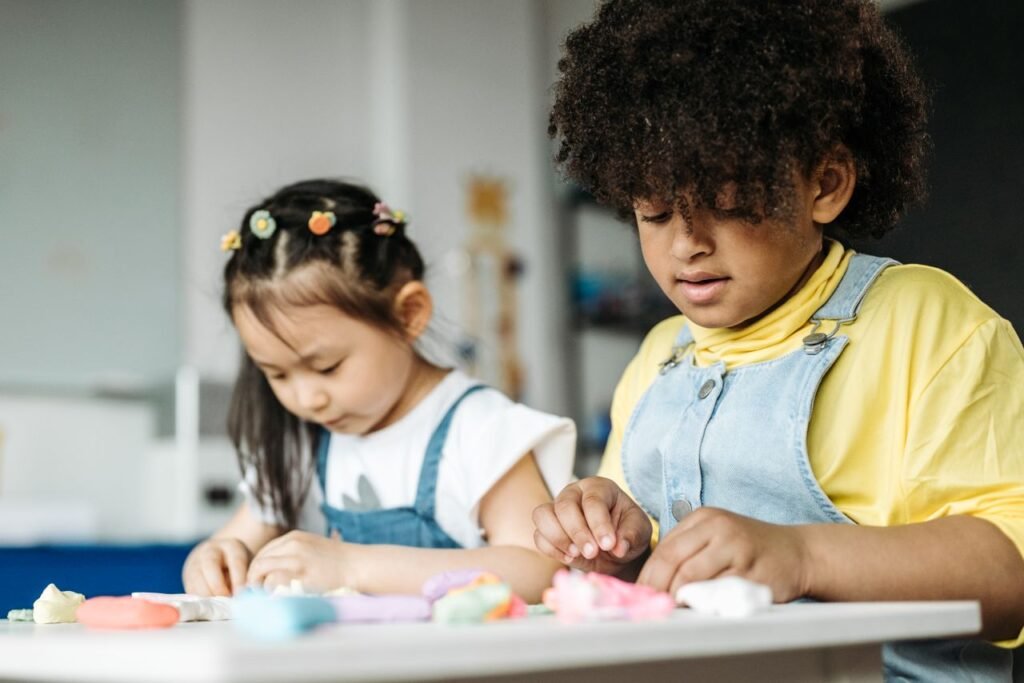
Many parents notice challenges like their child struggling to hold a pencil, can’t button their clothes, even colouring seems so difficult, but they assume their child will simply “grow out of them.”
Sometimes they do. But in many cases, children simply need more opportunities to strengthen the small muscles in their hands and fingers through purposeful play and everyday activities.
These small muscles are responsible for many of the tasks children perform every day, from holding a spoon and fastening buttons to writing their name and cutting with scissors.
These are known as fine motor skills.
The good news is that improving fine motor skills doesn’t always require expensive toys or long therapy sessions. Some of the most effective activities are simple, enjoyable, and can be done right at home.
Let’s look at five activities that help build stronger hands, better coordination, and greater independence.
What Are Fine Motor Skills?
Fine motor skills involve the small muscles of the hands, fingers, wrists, and thumbs working together with the eyes.
Children use these skills every day to:
- Hold a pencil or crayon.
- Use scissors.
- Zip jackets.
- Button shirts.
- Feed themselves.
- Build with blocks.
- Turn book pages.
- Brush their teeth.
- Open lunch boxes.
When these muscles are weak or poorly coordinated, everyday tasks can become frustrating.
A child may avoid drawing, struggle during handwriting, become tired quickly while colouring, or need extra help with dressing.
The encouraging news is that fine motor skills improve with practice, repetition, and the right activities.
Why Fine Motor Skills Matter
Many people think fine motor skills are only important for handwriting.
In reality, they affect almost every part of a child’s daily routine.
Strong fine motor skills support:
- Independence during dressing.
- Better handwriting.
- Successful school participation.
- Self-feeding.
- Art and creative activities.
- Confidence in everyday tasks.
As children become more successful in these activities, they often become more willing to participate and explore new challenges.
1. Play Dough Activities
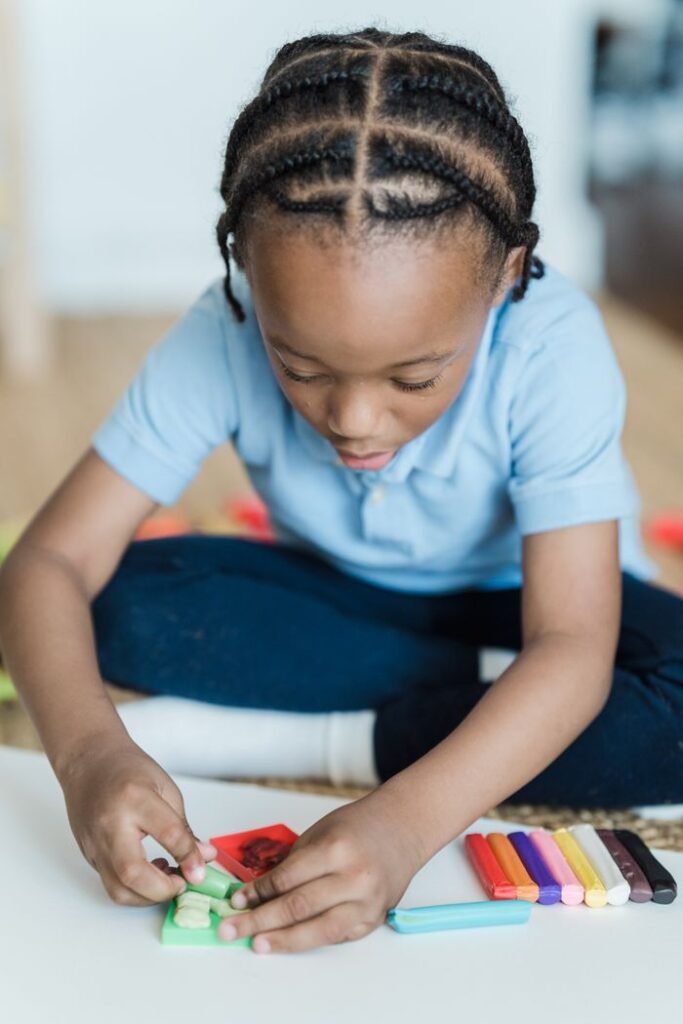
One of the simplest and most effective ways to strengthen little hands is through play dough.
Rolling, squeezing, pinching, flattening, and pulling play-dough gives the small muscles of the hands a gentle workout without children even realizing they’re exercising.
You can make it even more fun by asking your child to:
- Roll long “snakes.”
- Make tiny balls.
- Flatten pancakes.
- Hide beads inside the dough to find.
- Cut shapes using child-safe cutters.
These activities help improve finger strength, hand endurance, and finger coordination.
For many children, play dough feels more like play than practice, which is exactly why it works so well.
2. Pegs, Tweezers, and Picking Games
Picking up small objects is excellent for developing the pincer grasp, the same grip children use to hold a pencil correctly.
Simple activities include:
- Picking up pom-poms with tweezers.
- Using clothespins or pegs.
- Sorting buttons by colour.
- Moving cotton balls from one bowl to another.
- Picking up beads with tongs.
These activities strengthen the thumb, index finger, and middle finger while improving precision and hand control.
They also encourage children to slow down, focus, and use both hands together.
3. Cutting and Paper Crafts
Cutting with child-safe scissors strengthens many of the muscles needed for handwriting and self-care.
Children can begin by cutting:
- Straight lines.
- Zigzag lines.
- Curved lines.
- Shapes.
- Pictures from old magazines.
You can also encourage activities such as:
- Tearing paper.
- Folding paper.
- Gluing shapes.
- Making simple crafts.
Besides improving hand strength, these activities build hand-eye coordination, planning skills, and bilateral coordination.
4. Building Blocks and Construction Toys
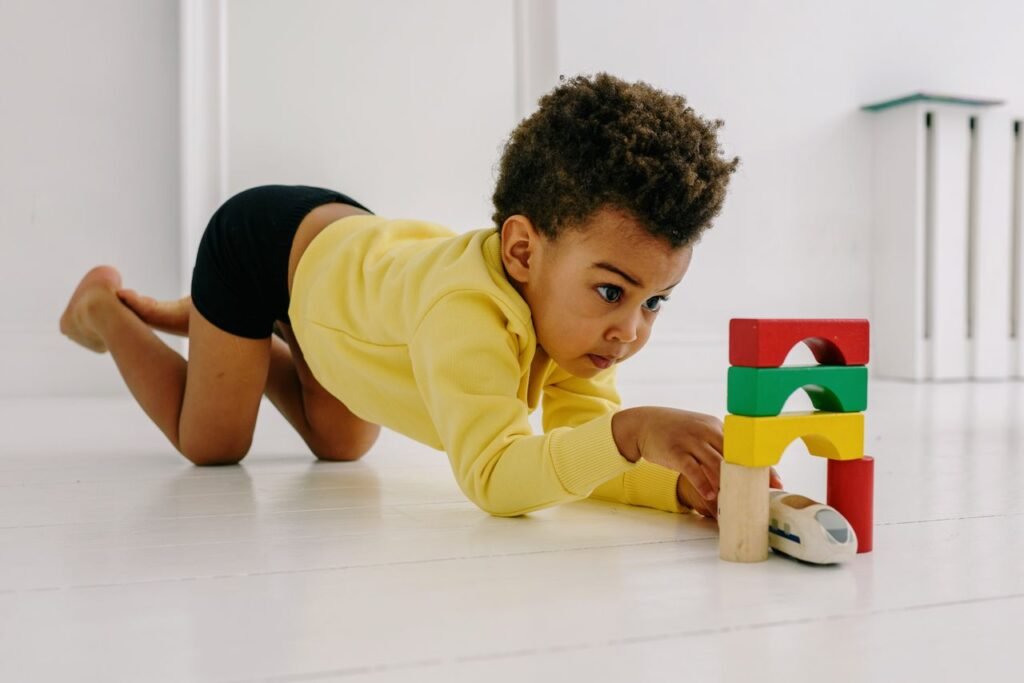
Building towers is more than just fun.
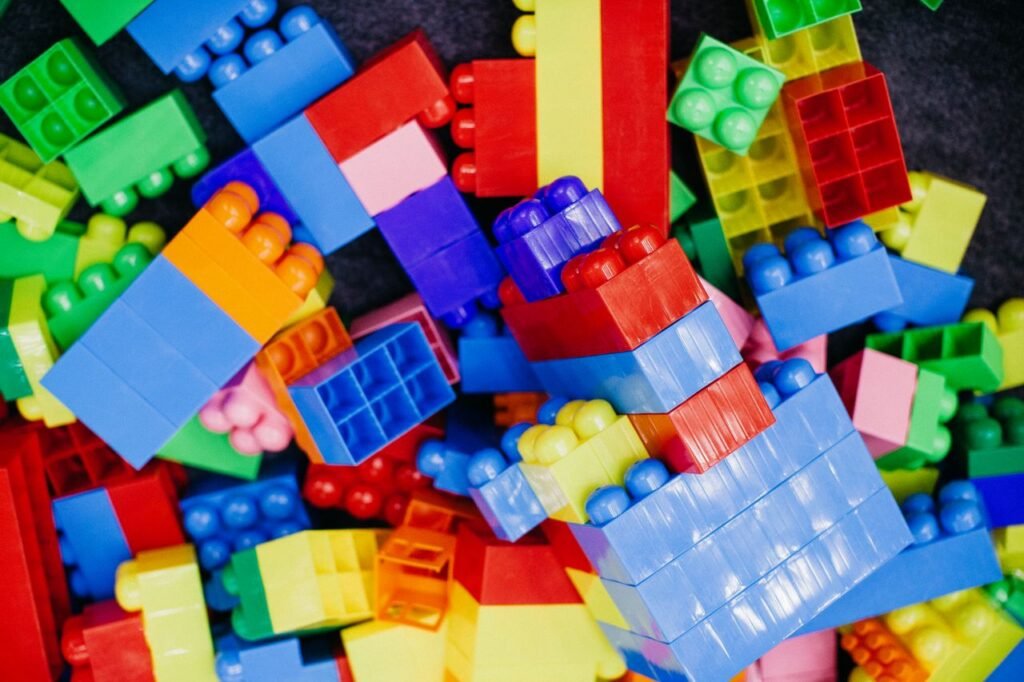
Picking up, stacking, connecting, and balancing blocks helps children develop:
- Finger strength.
- Hand stability.
- Precision.
- Problem-solving skills.
- Coordination between both hands.
Construction toys also encourage children to experiment, create, and stay engaged for longer periods.
Even simple household items like plastic cups or cardboard boxes can become excellent fine motor activities.
5. Everyday Self-Care Activities
Some of the best fine motor exercises happen during everyday routines.
Instead of doing everything for your child, encourage them to participate in daily tasks such as:
- Buttoning shirts.
- Pulling up zippers.
- Opening food containers.
- Peeling bananas.
- Using a spoon or fork.
- Brushing their teeth.
- Turning door handles.
These activities may take longer at first, but they provide meaningful opportunities to build independence while strengthening hand muscles.
Practice during real-life situations often has the greatest impact because children immediately see the purpose of the skill.

Keep Activities Fun, Not Stressful
Children learn best when they’re enjoying themselves.
Rather than turning every activity into a lesson, make it playful.
Celebrate effort, not perfection.
Some children may need extra time before they master a new skill, and that’s perfectly okay.
Short, enjoyable sessions repeated consistently are usually far more effective than long practice sessions that leave children feeling frustrated.
Remember, progress is built one small success at a time.
When Should Parents Seek Extra Support?
Every child develops at their own pace, but it may be helpful to seek guidance if your child consistently:
- Avoids drawing, colouring, or crafts.
- Struggles to hold a pencil appropriately.
- Has difficulty using scissors.
- Cannot manage buttons or zippers for their age.
- Becomes tired very quickly during hand activities.
- Frequently switches hands while writing or colouring.
- Finds everyday tasks requiring hand coordination unusually difficult.
Early support can help identify the underlying challenges and provide practical strategies that fit naturally into the child’s daily routine.
Final Thoughts
Fine motor skills are built through everyday experiences, not overnight.
The strongest gains often come from simple, consistent activities that encourage children to use their hands in meaningful ways.
Whether it’s squeezing play dough, using tweezers, cutting paper, building with blocks, or practicing everyday self-care, each activity strengthens the small muscles children rely on for learning and independence.
At SensoryCare Therapy Services, we encourage parents to look beyond worksheets and focus on purposeful play. When children enjoy the process, they are more motivated to practice, explore, and develop the skills they need for everyday life.
Remember, every small squeeze, pinch, cut, and stack is helping to build stronger hands and greater confidence.
Concerned About Your Child’s Development?
Early support can make a life-changing difference.
At Sensorycare, we help children with autism, ADHD, speech delays, sensory challenges, and developmental difficulties build the skills they need to thrive.
Book a consultation today and let’s discuss how we can support your child.
