
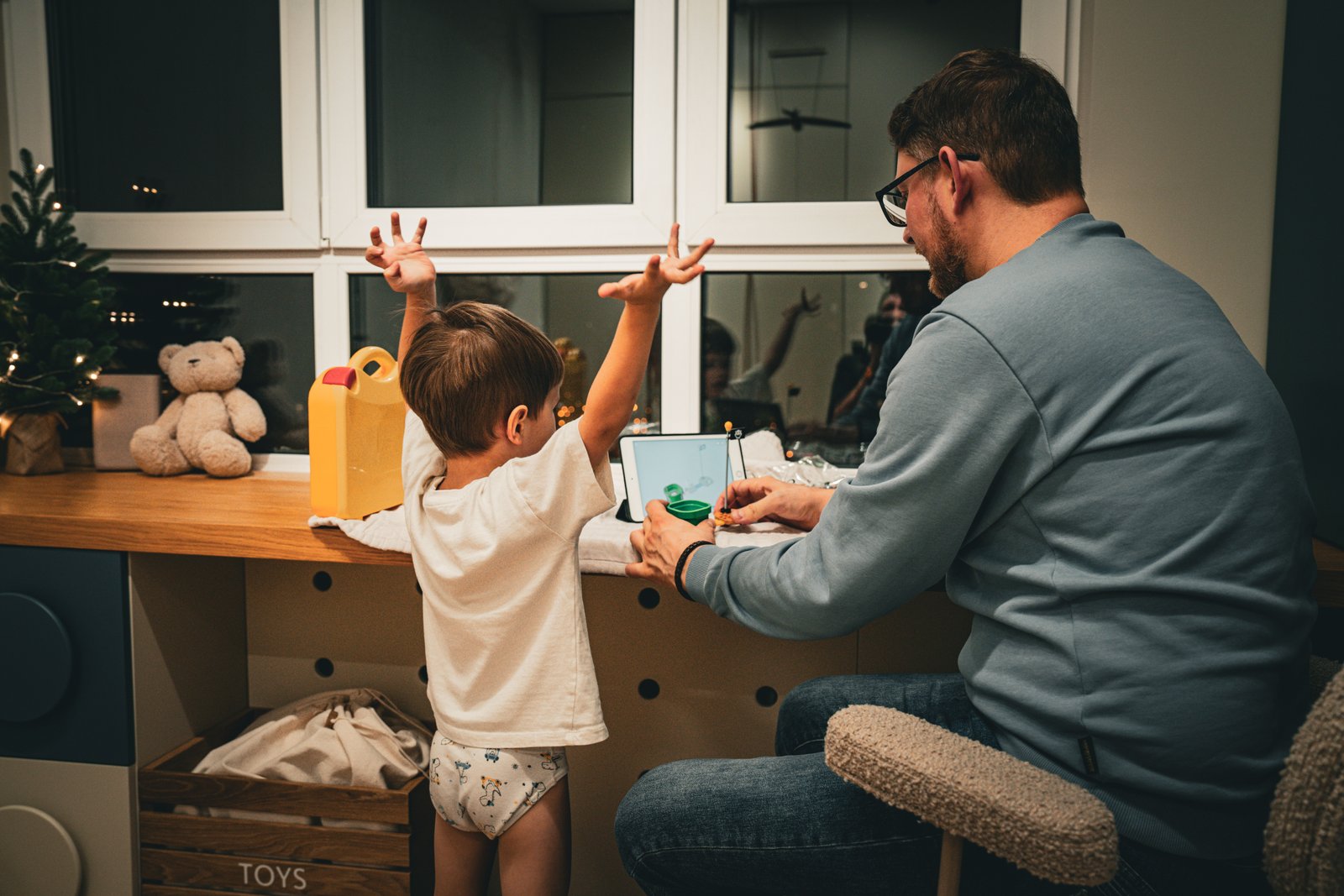
One of the most common questions we receive at Sensory Care Therapy Services is:
“My child points, waves, understands instructions, and seems to know exactly what I’m saying, but is that enough if they’re still not talking?”
It’s a question that reflects one of the biggest misconceptions about early communication development.
Many parents associate communication with spoken words. As a result, they become concerned only when their child isn’t talking, often overlooking the many ways children communicate long before their first word.
At Sensory Care Therapy Services, our therapists look beyond speech. During assessments, therapy sessions, school visits, and parent coaching, we pay close attention to the building blocks of communication, eye contact, joint attention, imitation, play, gestures, and social interaction. These skills provide valuable insight into how a child is developing and often tell us much more than the number of words a child can say.
Among these early communication skills, gestures are some of the most powerful and unfortunately, some of the most overlooked.
Understanding why gestures matter can help parents recognise healthy communication development, identify concerns early, and create more opportunities for meaningful interaction at home.
What Are Gestures in Communication Development?
Gestures are intentional body movements that children use to communicate ideas, needs, feelings, or interests before spoken language becomes fully developed.
Unlike random movements, communicative gestures have a purpose. They are directed toward another person with the intention of sharing information or receiving a response.
At Sensory Care Therapy Services, one of the first things we observe when interacting with a child isn’t whether they can count, identify colours, or even say words. We pay close attention to how they communicate before speech. Does the child point to request? Do they bring a toy to share? Do they look back at a parent after noticing something exciting? These seemingly simple behaviours tell us far more about a child’s communication development than many parents realise.
Some common examples include:
- Pointing to a toy they want
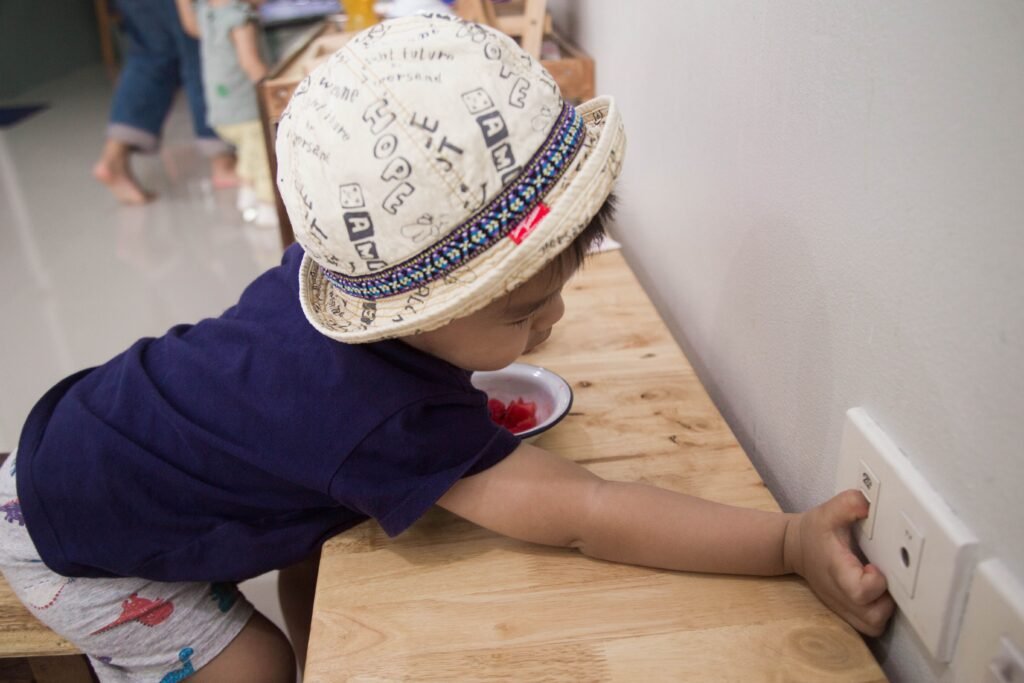
- Reaching up to be carried
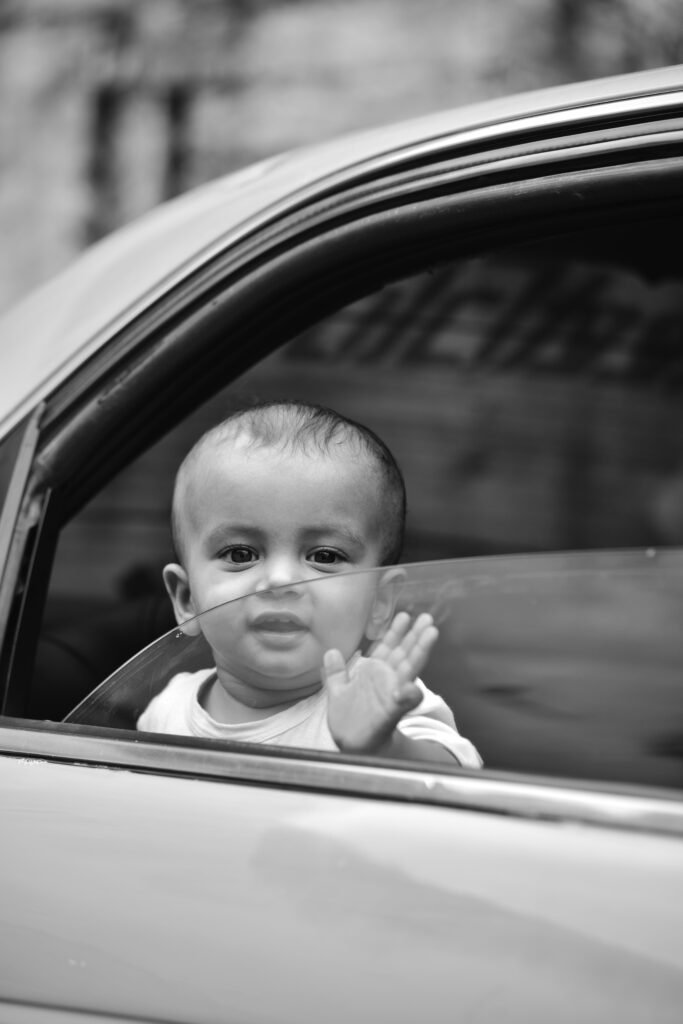
- Waving goodbye
- Clapping after completing an activity
- Nodding for “yes”
- Shaking the head for “no”
- Showing a favourite toy to a parent
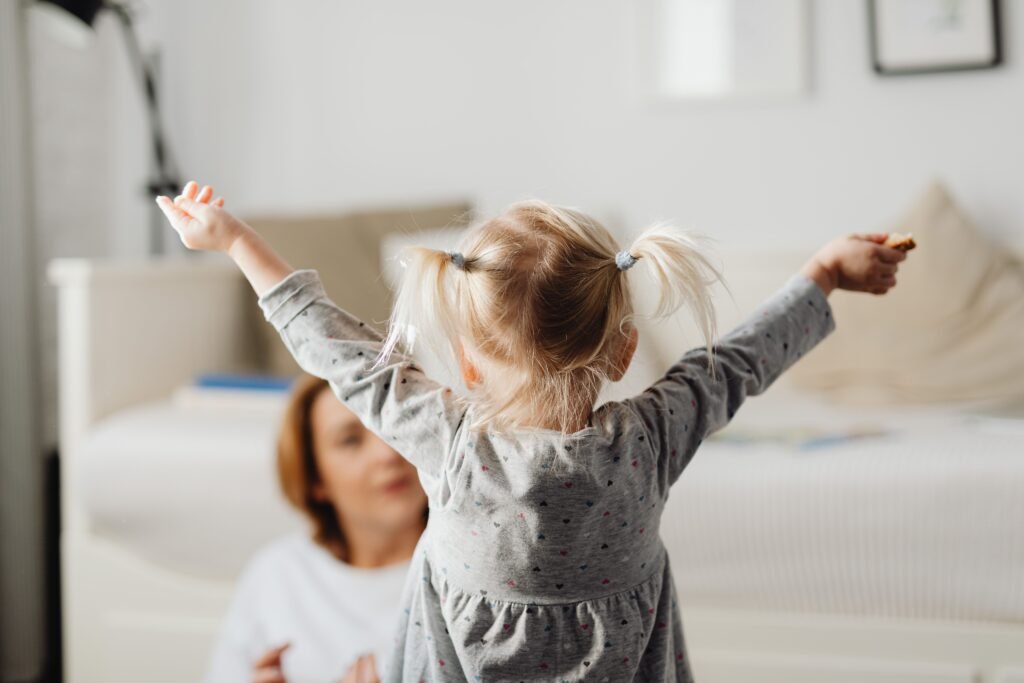
- Raising both hands in excitement
- Blowing kisses
- Giving an object to another person
These gestures may appear simple, but they represent important cognitive, social, and language skills that are developing simultaneously.
Why Are Gestures Important for Communication Development?
At Sensory Care Therapy Services, we often remind parents that communication begins with intention not with speech.
One of the first questions we ask during an assessment isn’t, “How many words can your child say?” Instead, we ask questions like:
- Does your child point to what they want?
- Do they bring toys to show you?
- Do they wave goodbye?
- Do they look at you before requesting help?
- Do they try to get your attention to share something interesting?
These questions help us understand whether a child recognises communication as a shared experience.
Every meaningful gesture tells us that a child is learning one of the most important lessons in communication: “I can use my actions to connect with another person.”
That understanding becomes the foundation upon which spoken language is built.
How Gestures Support Speech and Language Development
Gesture use is closely linked to later language development.
Children who use a variety of communicative gestures often develop stronger expressive language skills because gestures encourage meaningful interactions with adults.
When a child points to a dog and the parent responds,
“Yes, that’s a big brown dog. The dog is running.”
the child receives rich language connected to something they already understand and are interested in.
Every gesture creates an opportunity for adults to introduce new vocabulary, expand language, and encourage conversation.
Over time, these repeated interactions strengthen the child’s understanding of words, sentence structure, and communication.
Rather than replacing speech, gestures prepare children for speech.
Many children naturally progress through stages such as:
- Looking at an object
- Reaching toward the object
- Pointing to the object
- Pointing while vocalising
- Attempting the word
- Using the spoken word independently
This progression demonstrates how gestures often act as stepping stones toward verbal communication.
Different Types of Gestures and What They Mean
Understanding different types of gestures helps parents recognise whether communication skills are developing appropriately.
1. Requesting Gestures
These gestures help children communicate their wants and needs.
Examples include:
- Pointing to food
- Reaching for a toy
- Stretching their arms to be picked up
These behaviours demonstrate that children understand another person can help them achieve a goal.
2. Social Gestures
Social gestures support interaction and relationship building.
Examples include:
- Waving hello or goodbye
- Clapping
- High-fives
- Blowing kisses
These gestures show growing awareness of social routines and reciprocal interaction.
3. Joint Attention Gestures
One behaviour our therapists become particularly excited to see is joint attention.
To many parents, it may look like a small, ordinary moment.
A child notices an aeroplane flying overhead, points toward it, then looks back at Mum or Dad.
Or a child discovers a colourful butterfly in the garden and points, not because they want it, but because they want someone else to experience it too.
These moments are far more significant than they appear.
They demonstrate that a child isn’t only observing the world, they’re learning to share experiences with another person.
Joint attention is one of the strongest foundations for language development because conversation is built on shared attention. Before children learn to discuss what interests them, they first learn to invite others into those moments.
This is why our therapists pay such close attention to joint attention during assessments. It provides valuable insight into how communication is developing beyond spoken words.
Communication Milestones: When Should Gestures Develop?
Although every child develops at their own pace, gestures generally appear in a predictable sequence.
Around 6–9 Months
Children begin:
- Reaching for desired objects
- Raising their arms to be carried
- Using eye contact intentionally
- Participating in simple interactive games
Around 9–12 Months
Many children begin:
- Waving goodbye
- Clapping
- Showing objects
- Giving objects to others
- Pointing to request items
Around 12–18 Months
Children typically begin using gestures alongside sounds or single words.
For example:
Pointing to juice while attempting to say “ju.”
This combination of gesture and speech is an encouraging sign that communication skills are progressing.
Why Pointing Is One of the Most Important Early Communication Skills
Pointing deserves special attention because it provides valuable insight into a child’s communication development.
There are two main reasons a child point:
Proto-imperative Pointing
The child points to request something.
For example:
Pointing to biscuits on a shelf.
The message is:
“I want that.”
Proto-declarative Pointing
The child points simply to share interest.
For example:
Pointing at a rainbow.
The message is:
“Look at that!”
This second type of pointing is particularly important because it reflects social communication and shared attention rather than simply requesting needs.
When Should Parents Be Concerned?
Every child develops differently, and some variation is expected.
However, parents should seek professional guidance if a child:
- Rarely points to request or share interest
- Does not wave goodbye by around 12 months
- Does not use gestures to communicate needs
- Shows limited eye contact during interactions
- Rarely attempts to engage others
- Does not combine gestures with sounds or words as communication develops
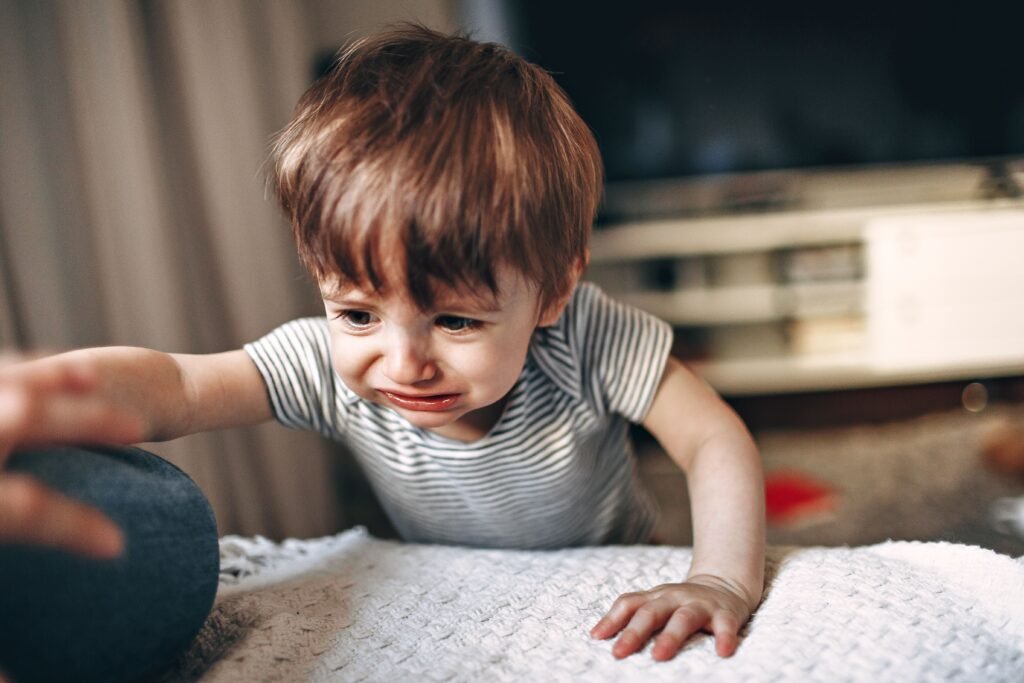
- Appears frustrated because they cannot communicate effectively
These signs do not automatically indicate a developmental disorder, but they do warrant further evaluation.
Early identification allows families to receive guidance before communication challenges become more significant.
How Parents Can Encourage Gesture Development
Parents play one of the most important roles in supporting communication.
Simple everyday interactions can have a powerful impact.
Follow Your Child’s Interests
Talk about what captures your child’s attention instead of directing every interaction.
Model Gestures Frequently
Wave, clap, point, nod, and use expressive facial expressions during everyday routines.
Children learn through observation.
Read Together
Picture books naturally encourage pointing, showing, and shared attention.
Pause frequently and allow your child to point before naming objects.
Create Opportunities to Communicate
Rather than anticipating every need immediately, allow your child time to point, reach, or gesture before helping.
This teaches that communication is meaningful.
Respond Enthusiastically
Whenever your child gestures, respond with words.
Expand what they are trying to communicate instead of simply giving the requested object.
One of the biggest lessons we share with parents at Sensory Care Therapy Services is that communication opportunities already exist within everyday routines.
You don’t need expensive toys, structured lessons, or hours of therapy activities to encourage gesture development.
Small changes during ordinary moments can make a meaningful difference.
For example, instead of immediately handing your child a favourite snack, pause for a few seconds. Hold it where they can see it and wait.
That brief pause creates an opportunity for your child to point, reach, look toward you, or make another intentional attempt to communicate.
When they do, respond enthusiastically.
Name the item.
Expand on what they’re communicating.
Celebrate the interaction.
These simple moments happen dozens of times each day, and together they create countless opportunities for children to learn that communication is rewarding.
At Sensory Care Therapy Services, we believe that every child communicates before they speak.
A point toward a favourite toy.
A wave goodbye.
A child proudly bringing a book to share.
A smile that says, “Look what I found.”
These moments may seem small, but they represent meaningful progress in a child’s communication journey.
Our goal has never been simply to help children say more words.
We work alongside families to build confident communicators by strengthening the skills that come before speech and continue long after the first words are spoken.
When parents understand the importance of gestures, they become active partners in their child’s communication development.
And when those early moments are recognised and nurtured, they often become the foundation for stronger language, meaningful relationships, greater independence, and lifelong confidence.
Concerned About Your Child’s Development?
Early support can make a life-changing difference.
At Sensorycare, we help children with autism, ADHD, speech delays, sensory challenges, and developmental difficulties build the skills they need to thrive.
Book a consultation today and let’s discuss how we can support your child.
